


What Is a Highly Sensitive Person (HSP)?
A highly sensitive person is someone born with a nervous system that processes sensory, emotional, and social information more deeply than most — which means the world hits you differently, and that’s not your fault. If you’ve ever been told you’re “too much” or “too sensitive,” know this: your sensitivity isn’t a weakness to fix — it’s a biological trait shared by roughly 15–20% of the population, and you are in good company. Being a highly sensitive person means you notice the flickering fluorescent light everyone else ignores, you feel joy and sorrow with uncommon intensity, and you need genuine downtime to recharge — and every single one of those qualities makes sense when you understand how your brain is wired.
When you stop fighting your nature and start honoring it, being a highly sensitive person transforms from a source of overwhelm into one of your greatest strengths.
Related: highly sensitive person traits — our complete guide.
Wondering if you are highly sensitive? Check out these common highly sensitive person traits and see how many you recognize.
The Science Behind High Sensitivity

The trait of being a highly sensitive person is not a personality quirk — it is a measurable biological difference. Psychologist Elaine Aron identified sensory processing sensitivity (SPS) in the 1990s and developed the DOES acronym: Depth of processing, Overstimulation, Emotional reactivity and empathy, and Sensing the subtle.
A landmark 2014 fMRI study by Bianca Acevedo and colleagues, published in Brain and Behavior, found that HSPs show significantly greater activation in the insula, anterior cingulate cortex, and mirror neuron system when viewing emotional faces. This means deep empathic processing is a default brain mode for HSPs — not something they choose, but something their brain does automatically.
From an evolutionary perspective, high sensitivity appears in over 100 species. In every group, a minority serves as the “pause-to-check” members — the ones who notice the predator’s shadow first, who detect subtle environmental changes. In humans, this translates to creativity, careful decision-making, and strong intuition.
20 Signs You Might Be a Highly Sensitive Person
Research by Elaine Aron (1997) estimates that approximately 15–20% of the population are highly sensitive people. If you wonder whether you fall into this group, here are the signs of a highly sensitive person.
The four core characteristics of Highly Sensitive People (DOES framework):
| Trait | What It Means | Everyday Example |
|---|---|---|
| Depth of processing | Thinking deeply about experiences and information | Needing time to reflect before making decisions |
| Overstimulation | Getting overwhelmed by too much sensory input | Feeling drained after a loud, crowded event |
| Emotional reactivity | Strong emotional responses to both positive and negative events | Being deeply moved by art or music |
| Sensitivity to subtleties | Noticing small details others miss | Detecting slight changes in a room’s lighting or a person’s mood |
- You feel easily overwhelmed by bright lights, loud noises, strong smells, or coarse fabrics.
- You startle more easily than others — sudden sounds or unexpected touches make you jump.
- You need to withdraw to a quiet, dimly lit room after a busy day to decompress.
- You have a rich, complex inner life — deep thoughts, vivid dreams, and a powerful imagination.
- You are deeply moved by art, music, and beauty, often to the point of tears or chills.
- You notice subtle details others miss: a slight shift in tone, a flicker of micro-expression.
- You become rattled or flustered when you have a lot to do in a short amount of time.
- Other people’s moods are contagious to you — you absorb emotions like a sponge.
- You feel physical discomfort when you see violence, cruelty, or suffering, even on screen.
- You are conscientious and cautious — you check your work thoroughly and rarely make careless mistakes.
- Caffeine, stimulants, and medications affect you more intensely than they affect most people.
- Hunger disrupts your focus and mood sharply; you feel frazzled or irritable when you haven’t eaten.
- You dislike multitasking and prefer to do one thing at a time with deep concentration.
- You have a lower pain threshold and are more sensitive to physical discomfort than those around you.
- Conflict and criticism cut deep — you take negative feedback to heart.
- You pick up on the emotional atmosphere of a room the moment you walk in, before anyone speaks.
- You are often told you are “too sensitive” or that you “think too much.”
- Decisions weigh heavily on you; you see all the angles and can become paralyzed by too many options.
- You feel a deep connection to nature and animals and find solace in solitude outdoors.
- You need more sleep than average to function well; skimping on rest derails your entire day.
HSP vs Non-HSP: A Side-by-Side Comparison
| Situation | Non-HSP Response | HSP Response |
|---|---|---|
| A colleague criticizes your work | You brush it off and move on | You feel the sting deeply and replay the comment for hours |
| You walk into a noisy crowded restaurant | You barely notice the background chatter | The overlapping voices feel overwhelming before you even sit down |
| Your calendar has back-to-back meetings all day | You power through and grab coffee between calls | By mid-afternoon you feel drained and crave a quiet break alone |
| Someone raises their voice near you | You register the tension but stay focused | Your nervous system kicks into high alert and takes a while to settle |
| You read a heartbreaking news story | You feel a brief pang of sadness then move on | The story stays with you for hours and you may tear up |
| Your phone buzzes with five notifications | You glance and triage what needs attention | The sudden flood of inputs feels jarring |
| A strong perfume passes by in a hallway | You notice the scent briefly and keep walking | The fragrance lingers and can trigger a headache |
How to Thrive as a Highly Sensitive Person
Being a highly sensitive person means you experience the world with greater depth. The challenge is not the sensitivity itself but learning to navigate a loud world without constant depletion.
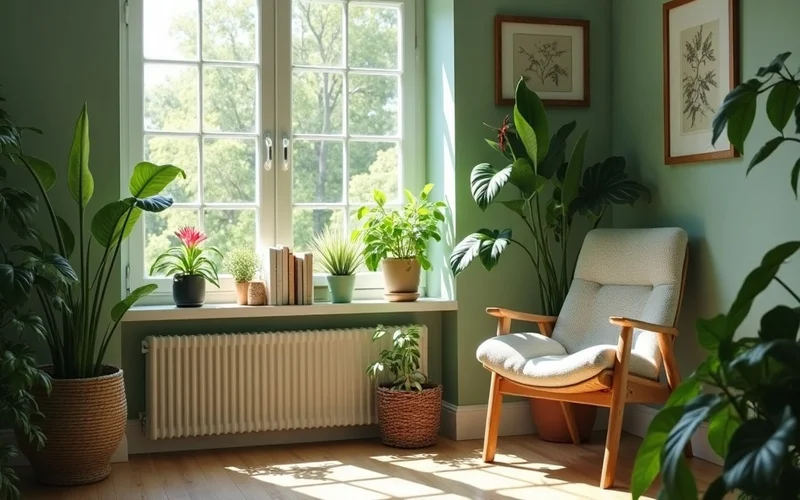
1. Design a sensory-safe space. Blackout curtains, white noise machine, natural fabrics, a corner with a weighted blanket and noise-canceling headphones. This is not indulgence — it is an anchor for your nervous system.
2. Build buffer time. Schedule 15-30 minutes between commitments. Use it for low-stimulus decompression: a silent walk, staring out a window, mindful breathing.
3. Set gentle boundaries. Practice: “I’d love to, but I need a quiet evening tonight.” Protect your limits around noise, crowds, and emotional demands.
4. Align your career with your wiring. Seek roles that honor deep focus and allow autonomy. Remote or hybrid arrangements often suit HSP temperaments well.
5. Protect your emotional energy. Before entering emotionally charged situations, visualize a soft boundary around yourself.
Limit violent or distressing media. Develop a grounding ritual to discharge accumulated emotional residue.
HSP at Work: Career Strategies for Sensitive People

The modern workplace was not designed with the highly sensitive person in mind. Fluorescent lights, ringing phones, shoulder-tap interruptions — the open-plan floor can push a sensitive nervous system past its threshold before lunch. For HSPs, the difference between thriving and burning out comes down to environment, boundaries, and self-knowledge.
Remote and hybrid work has been transformative for many HSPs. Controlling your own sensory environment removes the baseline drain that makes office life so costly. The key is intentionality: a dedicated workspace, hard stop times, and regular low-stakes social contact.
Communicating with managers. Frame needs in terms of output quality: “I do my best analytical work in uninterrupted blocks — could we agree on two meeting-free mornings each week?” This reframes accommodations as productivity optimizations.
Career fits. Ideal HSP careers allow for deep work over multitasking: writing, research, design, counseling, software development, accounting. The common thread is agency — freedom to shape how, when, and where the work gets done.
Embracing Your Sensitivity as a Strength
Living as a highly sensitive person in a world that often feels too loud, too fast, and too demanding isn’t easy — and we want you to know we see that struggle. Every subtle shift in a room, every unspoken word lands deeper for you, and carrying that depth day after day can be genuinely exhausting. There is nothing wrong with you. Your depth of processing, your rich inner world, your ability to notice what others miss — these aren’t flaws to fix.
They are rare gifts. The same sensitivity that makes things hurt more also lets you love more fully, create more beautifully, and connect more authentically. You are not too much.
You are exactly enough.
Highly Sensitive Person in Relationships
Relationships are among the most rewarding dimensions of life — and for a highly sensitive person, they can also be among the most consuming. The very wiring that lets you notice a partner micro-expression, sense a shift in their breathing before they speak, and absorb the emotional weather of a room is the same wiring that makes conflict feel like a physical blow. If you have ever felt that loving someone leaves you overstimulated or overexposed, you are not broken.
You are processing more input, more deeply, than most people ever will.
Emotional Attunement
You pick up on what your partner is feeling before they have named it. This makes you an extraordinary partner — empathetic, responsive, deeply connected. But attunement without boundaries becomes a burden.
When you cannot distinguish between what belongs to your partner and what belongs to you, you end up carrying both. Learning to notice without absorbing — to witness without becoming — is one of the hardest and most necessary skills for sensitive people in love.
When Conflict Becomes Overwhelming
For a highly sensitive person, an argument is rarely just an argument. A raised voice can feel like a physical assault. A sharp word echoes for hours. The nervous system processes conflict deeply — more cortisol floods the body, more neural circuits light up.
Many HSPs develop an understandable but costly pattern: avoiding conflict entirely, which means grievances go unspoken and resentment quietly accumulates. The alternative is working with a partner who understands you may need pauses and that you process slowly.
The Necessity of Space
Perhaps no need is more misunderstood than the need for space. A highly sensitive person often craves solitude not because they love their partner less, but because deep processing requires stillness. What looks like withdrawal is actually recalibration.
Communicating the difference is essential: I am not pulling away from you — I am pulling toward myself so I can show up fully when I return.
Explaining HSP to Your Partner
Frame the conversation around sensory processing, not emotional fragility. Describe it in terms of depth and intensity: you experience the world in high resolution, and that means both beauty and discomfort land harder. Share specific examples: when we have an intense conversation right before bed, my mind stays activated for hours.
Can we save those talks for earlier? These specifics transform a vague trait into a workable framework.
Finding Compatible Partners
What matters is not shared sensitivity but shared respect for how each person processes the world. The right partner will not simply tolerate your trait — they will recognize it as part of what makes intimacy with you distinctive and deep. Relationships as a highly sensitive person ask for more self-knowledge, more communication, and more intentional boundary-setting — but they also open a door to a kind of connection that less sensitive people may never fully access.
Parenting as a Highly Sensitive Person
Parenting stretches every human being to their limits, but for the highly sensitive person, the daily rhythms of family life can feel like standing inside a siren. When depth of processing collides with the noise, chaos, and relentless demand of raising children, the result is a profound and often invisible exhaustion. The overstimulation begins the moment small feet hit the floor — a toddler shriek lands not as background noise but as a full-body event. The simultaneous demands stack into a sensory avalanche.
For the highly sensitive parent, this is neurological flooding. Your nervous system hits capacity and begins to short-circuit. You find yourself snapping at the people you love most, not because you are a bad parent, but because your system has been bludgeoned past its processing threshold.
And then comes the guilt. It whispers that good parents do not need to lock themselves in the bathroom for five minutes just to breathe. It tells you that your need for solitude is selfishness dressed up in clinical language. This guilt is corrosive and isolating.
But nothing is broken. Your sensitivity is not a parenting defect — it is, in many ways, a quiet superpower. The same neurological wiring that makes you vulnerable to overstimulation also gifts you with an almost preternatural ability to read your child is emotional state.
You notice the micro-flinch before the tears come. Your empathy runs deep and wide.
Practical strategies make the difference. Stop apologizing for your needs. You require periods of quiet like other people require food — it is not negotiable. Noise-canceling headphones are not a luxury; they are an accessibility tool.
Structure protects the sensitive nervous system: predictable routines, visual schedules, designated quiet hours. You will still lose your patience. You will still have days when overstimulation wins.
That is not failure. What your children will remember is the moments you came back, regulated yourself, and repaired the rupture. Parenting as a highly sensitive person is not a lesser form of parenting — it is a specific and demanding form with genuine gifts of deep attunement and fierce empathy.
Highly Sensitive Person and Mental Health
Being a highly sensitive person is not a mental health condition, but the trait does intersect with mental health in important ways. HSPs are more vulnerable to anxiety and depression, not because sensitivity is pathological, but because a nervous system that processes everything deeply is more affected by negative environments, chronic stress, and trauma. Research published in the Journal of Personality shows that HSPs raised in supportive environments have no higher rates of mental health challenges than the general population — but HSPs raised in stressful or invalidating environments show significantly higher rates of anxiety and depression. This means your sensitivity is not the problem; it is the mismatch between your nervous system and your environment that causes distress.
The most powerful protective factor is self-awareness: knowing your limits, honoring your need for recovery, and building a life that works with your wiring rather than against it. If you have struggled with mental health as a highly sensitive person, please know that your sensitivity is not a liability — it is a trait that, in the right conditions, becomes a profound source of resilience, creativity, and deep connection to what matters most.
Frequently Asked Questions
Is being a highly sensitive person a disorder?
No. It is an innate temperament trait found in roughly 15-20% of the population, linked to a more responsive nervous system. It is not a pathology requiring clinical treatment.
Can HSP be cured or changed?
There is nothing to cure. What can change is how you manage sensitivity — with self-awareness, environmental adjustments, and healthy boundaries. The goal is building a lifestyle that works with the trait.
Is HSP the same as being an introvert?
No. Roughly 70% of HSPs are introverts, but 30% are extroverts or ambiverts. Introversion is about energy source; high sensitivity is about processing depth.
Is HSP the same as autism?
No. While both can involve sensory sensitivity, HSPs typically have strong social-emotional attunement and high empathy, without the social communication differences or restricted behaviors that define autism.